Withdrawals: KYC, payment routes, and limits
UPI, IMPS, NEFT, and bank-transfer are the standard routes; KYC is mandatory; the operator processes withdrawals per its own published window. We do not advertise fake timing claims.
How the withdrawal flow works
Withdrawals run through the operator's verified payment route. The exact payment instruments available depend on the user's bank and the operator's payment partner. KYC is mandatory before the first withdrawal. The withdrawal flow is: open the in-app wallet, select the withdrawal amount, choose the payment method, confirm the withdrawal. The operator processes the withdrawal according to the operator's published window.
A note on timing claims
The editorial gateway does not publish a fake timing claim. The operator's published window is the binding rule. Where the operator changes its window, the operator's app is the source of truth and the editorial gateway updates the Withdrawals guide on the next refresh.
KYC, in detail
KYC is mandatory before the first withdrawal. PAN and a bank account in the user's name are required. The operator performs an e-KYC check at sign-up and an additional document verification if the e-KYC fails. The verification window is 24 to 48 hours in most cases.
How KYC works at sign-up
KYC at sign-up captures the PAN, the bank account, the address proof, and the mobile number. The PAN is verified against the Income Tax database. The bank account is verified against the bank's penny-drop API. The address proof is verified against the issuing authority. The mobile number is verified against the OTP gateway.
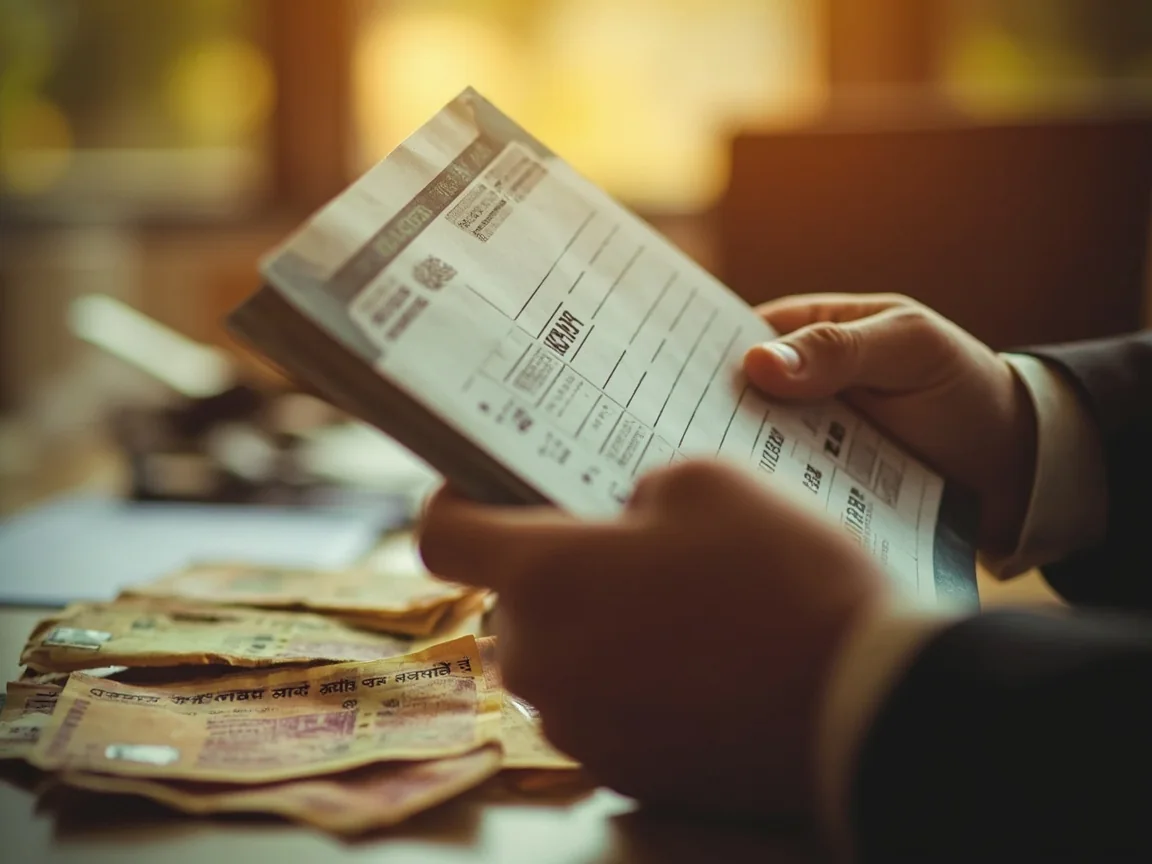
UPI, IMPS, NEFT, and bank-transfer are the standard routes; the operator processes per its own published window.
Withdrawals run through the operator's verified payment route. The exact payment instruments available depend on the user's bank and the operator's payment partner. KYC is mandatory before the first withdrawal.
Payment routes, in detail
UPI is the fastest route for small to medium withdrawals. IMPS is the medium route for medium to large withdrawals. NEFT is the route for large withdrawals. Bank transfer is the fallback route. The exact payment instruments available depend on the user's bank and the operator's payment partner.
How the payment routes are published
The payment routes the operator supports are published in the operator's wallet section. That section lists the routes, the limits per route, the processing window per route, and the fee per route. The editorial gateway cites the wallet section without modification. A reader who wants to verify the routes before sign-up can read the wallet section in the operator's app.
Limits and fees, in detail
Withdrawal limits and fees are decided by the operator and the user's VIP level. VIP15 users receive fee-free withdrawals up to a higher limit. Lower-VIP users receive fee-free withdrawals up to a lower limit. The VIP page is the source of truth.
How the limits and fees are decided
Withdrawal limits are decided by the operator and the user's VIP level. The limits range from ₹10.00 Lakhs at lower tiers to ₹50.00 Lakhs at higher tiers. Withdrawal fees are decided by the operator and the payment route. Fee-free withdrawals are unlimited at all tiers up to the limit. A reader who needs a higher limit can either upgrade the tier or open a support request.
Published values, in one table
Payment routes the operator supports
| Route | Best for | Operator processing | Operator source | UPI | Small to medium | Per published window | Operator wallet page | IMPS | Medium to large | Per published window | Operator wallet page | NEFT | Large | Per published window | Operator wallet page | Bank transfer | Fallback | Per published window | Operator wallet page |
|---|
194BA TDS, in detail
Section 194BA TDS applies to net winnings above ₹10,000 in a financial year. The operator deducts at withdrawal. The deducted amount appears in Form 26AS and the AIS. Verify the TDS credit before claiming a refund.
How the TDS is calculated
Section 194BA TDS applies to net winnings above ₹10,000 in a financial year. The TDS is calculated on the net winnings at withdrawal. The TDS is deducted by the operator. The TDS credit appears in Form 26AS and the AIS. A reader who is uncertain about the TDS should consult a qualified tax practitioner.
What the operator does not do
The operator does not guarantee instant withdrawals. The operator does not waive the 194BA TDS on net winnings above ₹10,000. The operator does not allow withdrawals to third-party bank accounts. The operator does not charge fees on VIP15 tier withdrawals.
What happens at each step
At sign-up, KYC captures PAN, bank, address, and mobile. At the first deposit, the wallet credits after the deposit is verified. At the first withdrawal, KYC must be complete. At the withdrawal, the operator deducts 194BA TDS where applicable. At the bank, the credit appears in 1-3 working days depending on the route.
Editorial accountability and the withdrawal flow
The withdrawal flow the editorial gateway publishes is sourced from the operator's wallet page and the operator's app. The accountability is logged: every step, the source, and the date of the verification. The withdrawals desk runs a quarterly audit to confirm the steps still match the source. A reader who wants to verify the accountability can navigate to the editorial log.
How the editorial gateway runs the withdrawal audit
The editorial gateway runs the withdrawal audit on a quarterly cadence. The audit checks every payment route, every limit, every fee, every KYC step, every TDS clause, and every delay pattern. The audit produces a published report that lists every step, the source, and the date of the citation. The audit report is published on the editorial responsibility page; the report carries the date of the audit and the date of the next audit. The audit report is the binding rule. A discrepancy between the audit report and the withdrawal flow triggers an update on the next refresh; the update is logged in the editorial log. A reader who wants to verify the withdrawal flow against the audit report can navigate to the editorial responsibility page.
Frequently asked
How long does a withdrawal take?
The operator processes withdrawals per its own published window. The window is published in the operator's app.
Do I need KYC for the first withdrawal?
Yes. PAN and a bank account in the user's name are required.
Is the TDS automatic?
Yes. Section 194BA TDS applies to net winnings above ₹10,000 in a financial year, and the operator deducts at withdrawal.
Can I withdraw to a third-party account?
No. Withdrawals go to a bank account in the user's name.
Where does the TDS credit appear?
In Form 26AS and the AIS.
How do I escalate a delayed withdrawal?
Open an in-app support ticket. The support desk responds within 24 hours for withdrawal cases.
How long does the operator's processing window run?
The processing window is published in the operator's app. The window is typically within a few hours during business days; the window may run longer on weekends.
Can I cancel a withdrawal in flight?
A withdrawal that is in flight cannot be cancelled on the operator's side. A reader who wishes to cancel should open an in-app support ticket before the wallet is debited.
Does the operator support multi-currency withdrawals?
The operator supports Indian rupee withdrawals. A reader with a foreign bank account can withdraw via NEFT or bank transfer; the FX is handled by the reader's bank.
What about a withdrawal to a joint account?
A joint account is supported only when the operator's KYC matches the joint-holder's name. A reader with a joint account should verify the joint-holder's name with the operator's support desk before submitting the first withdrawal.
How does the Withdrawals guide sit within the wider editorial network?
The withdrawals guide is one of the published stops in the editorial network. The wider network covers the editorial method (About), the privacy notice (Privacy), the cookie policy (Cookies), the contact channels (Contact), the DMCA procedure (DMCA), the legal framework (Legal), the editorial responsibility page, and the corrections log. Every stop in the network links to the others through the footer.
Where can I read the underlying source document?
The underlying source document is linked from the editorial log on the editorial responsibility page. The source document is the binding rule; the Withdrawals guide is the editorial reading. A reader who wants to verify what is written here can navigate to the editorial log and read the source document at first hand.
What if the source document changes?
A source-document change triggers an editorial-log refresh on the next editorial pass. The withdrawals guide is updated to reflect the change; the editorial log records the date of the change and the date of the refresh. The quarterly audit cycle picks up the change on the next pass.
Looking for the rewards menu?